rules questions 2026
What Did the FDA Change in April 2026?
Twelve peptides, BPC-157 and TB-500 among them, left the FDA's "significant safety risks" compounding category in April 2026. None of them was approved, none was moved to the permitted category, and the question of whether pharmacies may compound them is still going through committee and rulemaking.
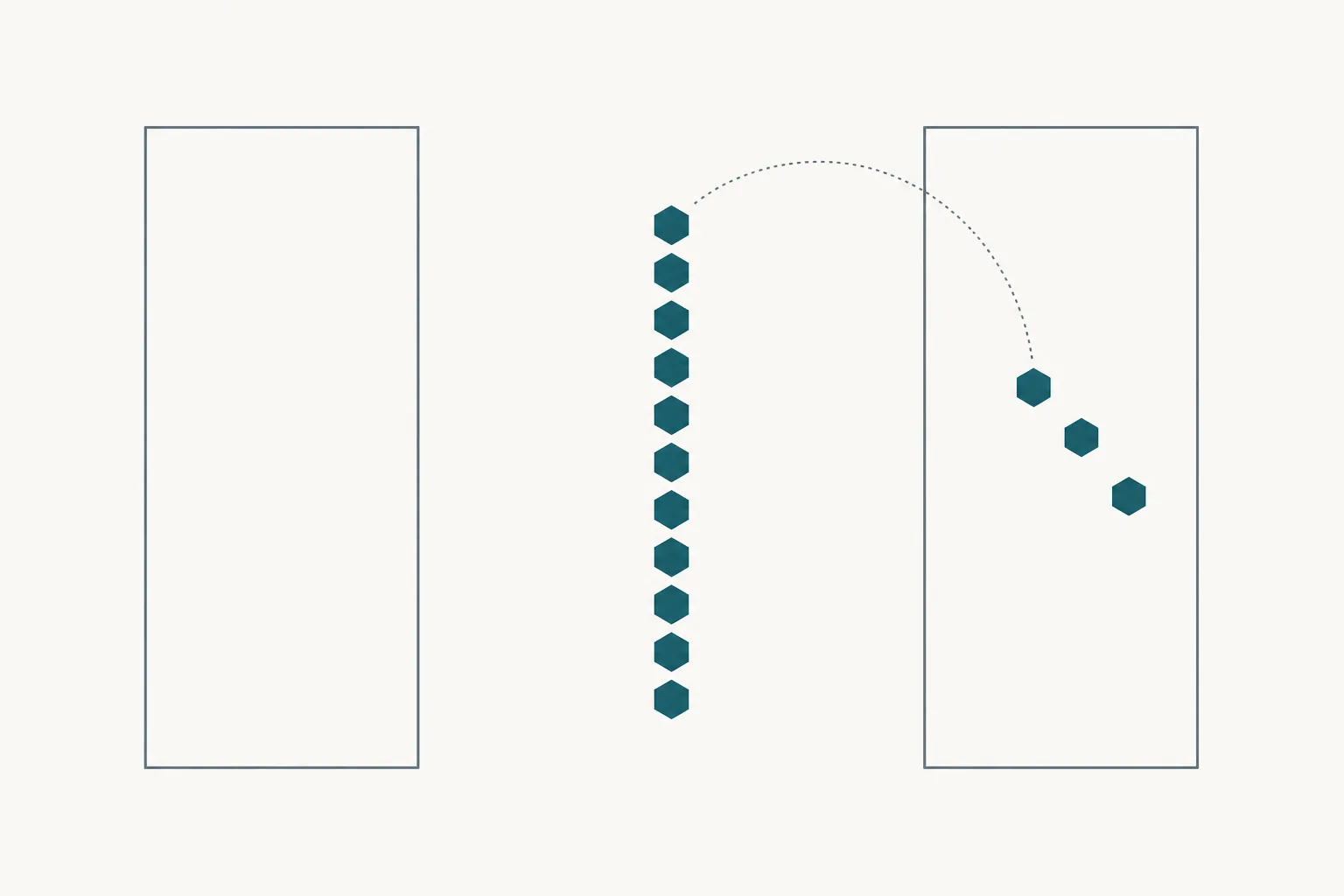
It removed twelve peptides from Category 2 of its compounding categories, the group it treats as presenting significant safety risks, and it did so because the nominations for those substances had been withdrawn. The agency gave notice on 15 April 2026 that the change would take effect after seven days, and by 22 April the published Category 2 list no longer included them 14. What it did not do matters as much: it did not approve any of the twelve, did not move them into Category 1, and did not add them to the list of substances pharmacies may lawfully compound from 4.
This page is about one narrow thing, the United States rules for pharmacy compounding under section 503A of the Federal Food, Drug, and Cosmetic Act. It is not about how research chemicals are classified generally, which is a separate question with its own article, and it says nothing about the position in any other country. It describes what happened and what it means. It is not legal advice.
What are the FDA's bulk drug substance categories?
They are temporary holding groups for substances that someone has nominated for use in pharmacy compounding, sorted by what the FDA thinks of the nomination while it decides whether to add each one to a permanent list. Category 1 substances may be compounded under the agency's interim policy; Category 2 substances raise significant safety concerns and may not; Category 3 substances were nominated with too little information to evaluate 2.
The background is that a 503A pharmacy, compounding for individual patients against prescriptions, can generally work from a bulk active ingredient only if that ingredient has a pharmacopoeia monograph, is a component of an approved drug, or appears on a list the FDA maintains of permitted bulk substances 23. Building that list takes years of review, so the agency created the categories as an interim policy to decide, meanwhile, which nominated substances it would tolerate and which it would act against.
| Category | What it means | Compounding under the interim policy |
|---|---|---|
| 1 | Nominated with enough information to evaluate; no significant safety risk identified so far | The FDA does not intend to act against it, if other conditions are met |
| 2 | Nominated with enough information to evaluate; significant safety risks identified | Not permitted unless and until a final rule or notice authorises it |
| 3 | Nominated without adequate supporting information | Not eligible for the Category 1 policy |
| 503A bulks list | The permanent list, set by rulemaking after committee review | Permitted, subject to the rest of section 503A |
The detail that explains everything else is this: a category is a place to hold a nomination. It is not an assessment of the molecule that exists on its own, and a substance that nobody has nominated sits in no category at all.
Which peptides were removed from Category 2?
Twelve were removed, and they are the ones most often named in discussion of research peptides. According to the agency's announcement as summarised by counsel following it, the list was 4:
- BPC-157
- TB-500
- GHK-Cu (the injectable nomination)
- KPV
- MOTS-c
- Epitalon
- Semax
- DSIP, also known by its international name emideltide
- LL-37
- Dihexa
- PEG-MGF
- Melanotan II
Several peptides stayed where they were, and that is easy to miss. The FDA's own page listing substances that may present significant safety risks, as updated on 22 April 2026, still includes GHRP-2, GHRP-6, ipamorelin acetate, kisspeptin-10 and the non-peptide secretagogue ibutamoren mesylate, alongside unrelated substances such as chloral hydrate and domperidone 1. So April was not a general move on peptides. It concerned a specific set of nominations.
Why did the FDA remove them?
Because the people who had nominated them withdrew the nominations, and without a live nomination there is nothing for a category to hold. That is the reason the agency gave 4.
The withdrawal did not happen in a vacuum. On 27 February 2026 the Secretary of Health and Human Services announced that the administration intended to make peptides more accessible through lawful compounding channels 4. Withdrawing the old nominations cleared the substances out of the prohibited category, and the same announcement in April scheduled advisory committee meetings to consider them afresh for the permanent list 4.
What the removal was not is a scientific finding. Nothing in the reported reasoning says the FDA re-examined the safety evidence and changed its mind. The substances left Category 2 through a procedural route, which is precisely why they did not arrive anywhere else.
What does "removed from Category 2 but not added to Category 1" mean?
It means the twelve substances are in none of the places that give a compounder a basis to use them. As the law firm commentary put it, removal from Category 2 does not, by itself, place these substances on the 503A bulks list or into Category 1 4.
Walk through the options and the gap is plain. They are not on the bulks list, so the permanent permission does not apply. They are not in Category 1, so the interim policy of non-enforcement does not apply either. And they are no longer in Category 2, so the explicit statement that they raise significant safety risks has gone from the published list. The result has been widely described as a grey zone, but it is more accurate to call it an absence: the old prohibition was withdrawn and nothing has yet replaced it.
The route out of that absence runs through three steps. An advisory committee reviews each substance and votes; the FDA then decides whether to propose adding it to the bulks list; and any addition happens by notice-and-comment rulemaking, which takes further months 68.
What did the advisory committee decide in July 2026?
It recommended six of the seven peptides it reviewed for the bulks list, and declined the seventh. The Pharmacy Compounding Advisory Committee met on 23 and 24 July 2026. On the first day it considered BPC-157, KPV, TB-500 and MOTS-c; on the second, emideltide, Semax and Epitalon, each against the specific medical conditions named in its nomination 5.
| Substance | Day reviewed | Committee recommendation |
|---|---|---|
| BPC-157 | 23 July | Include on the bulks list (eight for, six against, one abstention) |
| KPV | 23 July | Include |
| TB-500 | 23 July | Include |
| MOTS-c | 23 July | Include |
| Emideltide (DSIP) | 24 July | Do not include (six for, seven against) |
| Semax | 24 July | Include |
| Epitalon | 24 July | Include |
The recommendations went against the agency's own reviewers on at least two substances. FDA staff had advised against including BPC-157 and KPV, citing limited evidence of effectiveness and the availability of approved treatments; the one ulcerative colitis trial identified for BPC-157 involved 46 subjects, and no human studies were located for KPV 7. The BPC-157 vote itself was close, at eight in favour, six against and one abstention 7.
Neither vote changes the law. Committee recommendations are advisory, and pharmacy commentary after the meeting was explicit that compounders cannot rely on them until final rulemaking is in place 8.
What happens to the other five peptides?
They are due before the same committee at a second meeting, expected before the end of February 2027. The five are LL-37, GHK-Cu, Dihexa acetate, melanotan II and PEG-MGF 6.
Until then they sit in the same position as the July seven did in April: out of Category 2, not in Category 1, not on the bulks list. The committee's decision on them, whichever way it goes, will again be advice to the agency rather than a change in the rules.
Did any of this approve a peptide as a medicine?
No. Approval of a drug is a different process entirely, in which a sponsor submits evidence on one product for one use and the FDA assesses it. The bulks list governs something narrower: which ingredients a licensed pharmacy may use to prepare a medicine for a named patient on a prescription 3.
Even a substance that eventually reaches the bulks list is not thereby an approved drug. It becomes an ingredient that compounding pharmacies may use within the conditions of section 503A. That distinction is the one most often lost in coverage of April, where "removed from the banned list" has been read as "cleared".
Does the change affect material sold for laboratory research?
Not directly. The categories and the bulks list are rules about what licensed compounding pharmacies may do; they were never a register of what laboratory suppliers may sell, and the April change created no new permission for anyone outside compounding 24.
It also changes nothing outside the United States. Every other country applies its own medicines law, and a decision about American compounding rules has no legal effect on how another regulator classifies the same substance.
So what actually changed in April 2026?
A prohibition was lifted for procedural reasons and nothing was put in its place. Twelve peptides that the FDA had listed as raising significant safety risks in compounding were taken off that list because their nominations were withdrawn, and the agency set out a review timetable to decide, substance by substance, whether they belong on the permanent list 14.
Five months on, that process is half-way through. Six substances have a favourable committee vote that is not binding, one has an unfavourable vote, and five have not yet been heard. None of the twelve is an approved medicine, none is on the bulks list, and the earliest point at which the picture could settle is after the second committee meeting and the rulemaking that would have to follow it.
References
- Certain Bulk Drug Substances for Use in Compounding that May Present Significant Safety Risks
- Interim Policy on Compounding Using Bulk Drug Substances Under Section 503A of the Federal Food, Drug, and Cosmetic Act — Guidance for Industry
- Bulk Drug Substances Used in Compounding Under Section 503A of the FD&C Act
- FDA Announces Removal of 12 Peptides from Category 2 and Schedules PCAC Meetings to Consider Adding Peptides to 503A Bulk Drug Substances List
- July 23-24, 2026: Meeting of the Pharmacy Compounding Advisory Committee
- FDA Peptide Compounding Vote: What to Watch at the July PCAC Meeting
- An FDA Committee Just Voted in Favor of Peptides—Despite the Agency's Opposition
- FDA advisory committee nominates six peptides for pharmacies to compound