evidence questions 2026
Are GLP-1 Drugs Peptides?
Almost all of them are — semaglutide and tirzepatide included — and one approved GLP-1 drug is not. What makes them peptides, and why that decides how they are made, stored and taken.
Most of them are. Semaglutide (sold as Ozempic and Wegovy) and tirzepatide (sold as Mounjaro and Zepbound) are both peptides: chains of amino acids, modelled on hormones the body makes, with chemical changes that make them last longer. The exception is orforglipron (sold as Foundayo), approved in 2026, which is a small molecule and not a peptide at all 7. So the accurate answer is that the GLP-1 class is overwhelmingly made of peptides, but being a GLP-1 drug no longer automatically means being one.
That is not a technicality. Whether a drug is a peptide decides how it has to be made, how it has to be protected, how long it lasts in the body and whether it can be swallowed. Most of what is distinctive about these medicines follows from that single fact.
What makes something a peptide?
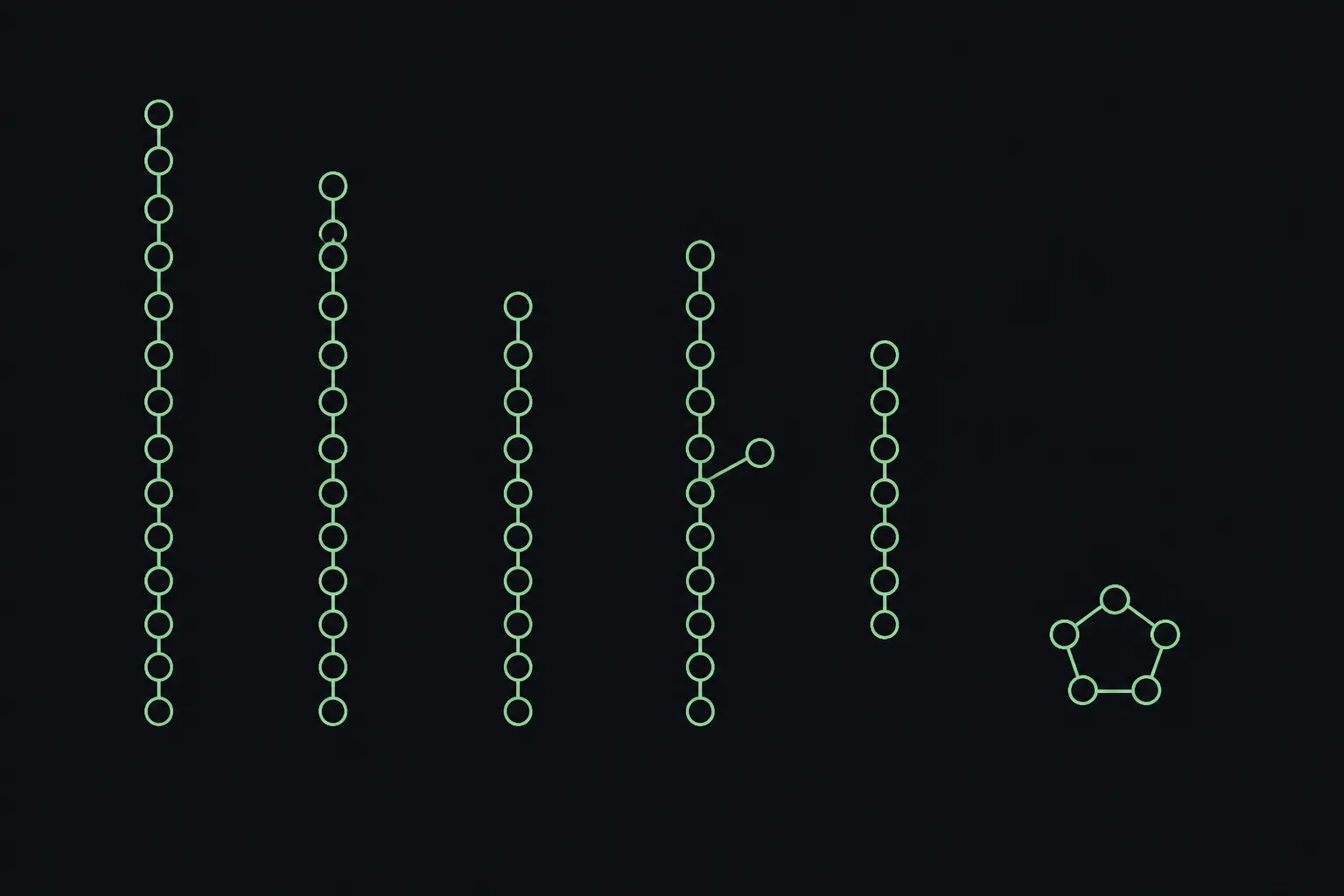
Being a chain of amino acids linked by peptide bonds, short enough not to count as a protein. There is no sharp dividing line, but chains of up to roughly fifty amino acids are usually called peptides and longer ones proteins. Chemical modifications do not change the category: a peptide with a fatty acid or another group attached is still a peptide, in the same way that a painted door is still a door.
The hormone the whole class is named after is itself a peptide. GLP-1, glucagon-like peptide-1, is released by cells in the gut after eating. It increases insulin release when blood sugar is high, reduces glucagon, slows stomach emptying and reduces food intake 1. It is also broken down very quickly, within minutes, by an enzyme in the blood called DPP-4 1. That short life is the problem every GLP-1 drug had to solve.
Is Ozempic a peptide?
Yes. Ozempic and Wegovy contain semaglutide, which is a modified version of human GLP-1. Compared with the natural hormone, it has two amino acids changed — one to block the enzyme that normally cuts GLP-1 apart — and a fatty-acid chain attached through a linker at a specific position on the chain 3.
The fatty-acid chain is the key to how long it lasts. It makes semaglutide bind strongly but reversibly to albumin, the most abundant protein in blood, which protects it from being broken down and filtered out and stretches its action to about a week 3. The paper describing its discovery sets out how the design built on an earlier once-daily GLP-1 drug, liraglutide, and adjusted the fatty acid and linker to increase albumin binding while keeping the molecule active at the receptor 3.
Is Mounjaro a peptide?
Yes. Mounjaro and Zepbound contain tirzepatide, which is also a peptide, but one built on a different starting sequence. Its backbone derives from GIP, the other incretin hormone, rather than from GLP-1, and it activates both the GIP and GLP-1 receptors 4. Like semaglutide, it carries a fatty-acid chain to bind albumin and extend its life.
Tirzepatide is a good example of why "GLP-1 drug" is a loose label. It is counted in the class because it activates the GLP-1 receptor, but it is not a GLP-1 analogue at all in the structural sense, and it engages its two receptors unevenly 4. What it has in common with semaglutide is that it is a modified peptide hormone designed to survive in the blood.
Where did the first GLP-1 drug come from?
From the venom of a lizard. In 1992, researchers isolated a 39-amino-acid peptide called exendin-4 from the venom of the Gila monster 2. It turned out to activate the GLP-1 receptor and, unlike human GLP-1, to resist the enzyme that breaks the human hormone down. A synthetic version, exenatide, became the first drug of the class to reach patients.
It is worth knowing because it shows the class was a peptide story from the very beginning. The problem was never finding something that activated the receptor — the natural hormone does that perfectly well. The problem was finding a peptide that lasted long enough in the body to be useful, and every later drug in the class is a more refined answer to the same question.
How does a peptide that lasts minutes become a drug that lasts a week?
By fixing the two things that remove the natural hormone so quickly: the enzyme that cuts it, and the kidneys that clear it. Natural GLP-1 is split by DPP-4 almost as soon as it enters the blood 1. Exendin-4 happened to resist that enzyme, which is what made it useful 2. Semaglutide gets the same protection by design, through a single amino-acid change at the point where the enzyme would cut 3.
The second fix is size, borrowed rather than built. A small peptide on its own is filtered out by the kidneys quickly. Attaching a fatty-acid chain makes the drug latch on to albumin, a large blood protein, so most of it circulates bound and protected, releasing gradually 3. None of this changes what the drug is. It remains a peptide throughout — one engineered to behave, in the body, as though it were much larger and much tougher than it is.
Which GLP-1 drug is not a peptide?
Orforglipron, approved by the FDA in April 2026 as Foundayo, which Lilly describes as a small-molecule, non-peptide GLP-1 receptor agonist 7. It is not built from amino acids. Structural work showed it binding in a pocket in the upper part of the GLP-1 receptor, a different position from the natural hormone, and acting as a partial agonist that favours one signalling route over another 5.
It is the exception that makes the rule visible. Because it is a small molecule, it can be taken as an ordinary tablet at any time of day without food or water restrictions 7. Every other drug in this family carries the practical consequences of being a peptide, which the next two questions deal with.
| Compound | Identifying brand names | Peptide? | Built on |
|---|---|---|---|
| Exenatide | — | Yes | Exendin-4, from lizard venom |
| Semaglutide | Ozempic, Wegovy | Yes | Human GLP-1, modified |
| Tirzepatide | Mounjaro, Zepbound | Yes | Human GIP sequence, modified |
| Orforglipron | Foundayo | No | Small molecule, not built from amino acids |
Why does being a peptide decide how these drugs are taken?
Because the gut is built to digest peptides and absorbs very little of them intact. Enzymes in the stomach and intestine exist to cut peptide bonds, and the gut lining lets very few large molecules through. A peptide swallowed without help is mostly broken down and barely absorbed. That is why semaglutide and tirzepatide were developed as injections under the skin, from where they are absorbed slowly into the blood.
Oral semaglutide shows how much effort it takes to get around this. It is formulated with an absorption enhancer called SNAC, and studies showed that absorption happens in the stomach, in a small area close to the dissolving tablet, and depends on SNAC being present to protect the peptide and briefly help it across the stomach lining 6. It works, but it needs strict conditions. Orforglipron, as a small molecule, needs none of that 7.
Why does it shape how they are made and stored?
Because a peptide has to be assembled link by link and then kept intact. Peptides are made either by building the chain one amino acid at a time on a synthesiser, or by having cells produce the chain, followed in either case by chemical modification such as attaching the fatty acid. Each step must be controlled closely, because a single wrong or missing amino acid produces a different molecule.
Once made, a peptide is more fragile than most small molecules. In solution, peptide chains can clump together, react with oxygen or break at weak points, and warmth speeds all of that up. That is the general reason injectable peptide medicines are usually kept refrigerated before use, and why peptides handled in laboratories are commonly supplied as freeze-dried powders. A small-molecule tablet, by contrast, is a dry, stable solid that is far more forgiving of ordinary conditions.
Does being a peptide make a drug more natural or safer?
No. "Peptide" is a description of chemical structure, not of safety, naturalness or strength. Semaglutide and tirzepatide are modelled on human hormones, but they are heavily engineered versions that behave very differently from the originals — lasting days instead of minutes, and in tirzepatide's case engaging two receptors in a way neither natural hormone does 34. Their effects and side effects come from what they do at the receptor, not from the word used to classify them.
The reverse is true as well. Orforglipron is not a peptide, and it acts on the same receptor and produces the same general kind of effects and side effects 57. What matters for any of these medicines is the evidence from trials of the approved product, not the chemical family it belongs to.
So what is the short answer?
Yes, with one exception. The GLP-1 class grew out of peptide hormones — first a peptide from lizard venom 2, then modified versions of human GLP-1 such as semaglutide 3 and of GIP such as tirzepatide 4 — and those drugs are peptides. Orforglipron is a small molecule that reaches the same receptor by a different route 57.
Being a peptide explains most of what makes these medicines distinctive: why the natural hormone had to be re-engineered to last, why most of them are injected, why the one peptide tablet needs an absorption enhancer, and why they are handled more carefully than ordinary tablets. The one drug that is not a peptide is interesting precisely because it escapes all of that.
References
- Mechanisms of Action and Therapeutic Application of Glucagon-like Peptide-1
- Isolation and characterization of exendin-4, an exendin-3 analogue, from Heloderma suspectum venom. Further evidence for an exendin receptor on dispersed acini from guinea pig pancreas
- Discovery of the Once-Weekly Glucagon-Like Peptide-1 (GLP-1) Analogue Semaglutide
- Tirzepatide is an imbalanced and biased dual GIP and GLP-1 receptor agonist
- Structural basis for GLP-1 receptor activation by LY3502970, an orally active nonpeptide agonist
- Transcellular stomach absorption of a derivatized glucagon-like peptide-1 receptor agonist
- FDA approves Lilly's Foundayo™ (orforglipron), the only GLP-1 pill for weight loss that can be taken any time of day without food or water restrictions