quality questions
Does a Certificate of Analysis Prove Anything?
It proves something specific and narrow — that named tests were run on a named batch and returned named results — and only if that batch is the one you are holding. Everything else attributed to these documents is inference.
It proves that named tests were run on a named batch and returned named results. That is a real claim, it is worth having, and it is a great deal narrower than the way certificates are usually invoked. The document's entire value rests on one condition that has nothing to do with its contents: whether the batch it describes is the batch you are holding.
This is a subject where honesty in both directions is necessary. Dismissing certificates as meaningless paper is wrong — release testing documentation is the backbone of quality assurance across the whole pharmaceutical supply chain. Treating a certificate as proof that a vial is good is also wrong, and for a more interesting reason: a certificate can be completely truthful, technically competent, and still tell you almost nothing about your material.
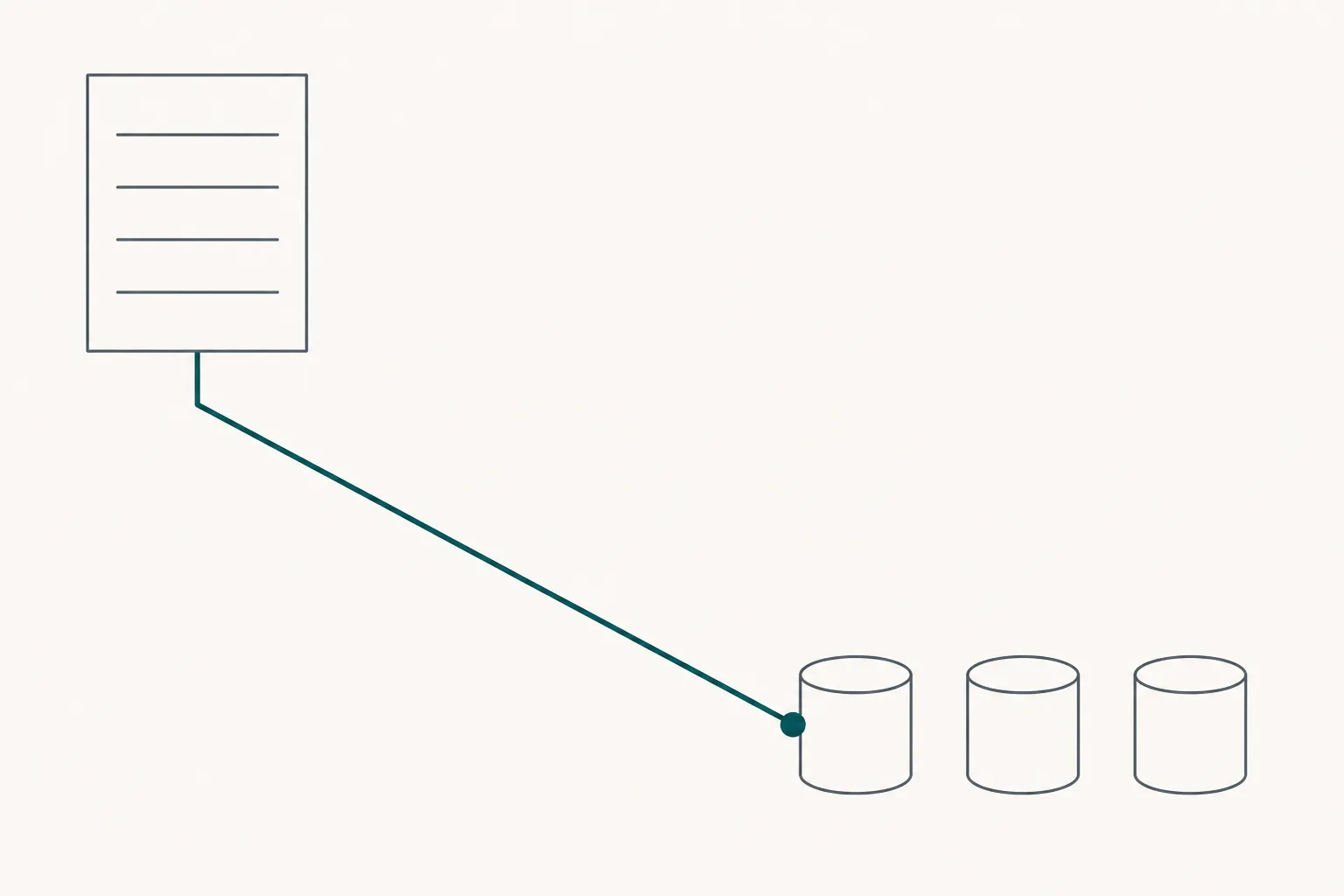
What does a certificate of analysis actually prove?
That on a stated date, stated tests performed by a stated method on a stated batch produced stated results. Nothing more, and it is a mistake to want it to say more, because that limited claim is exactly what makes it checkable.
The form is well defined where it is defined formally. Guidance on manufacturing active pharmaceutical ingredients sets out what a certificate should contain: identification of the material and its batch, the tests performed with their acceptance criteria, the results obtained, the date of issue, and the name and signature of the person authorising it 1. That list is a useful reference point even outside a regulated context, because every item on it exists to answer a question a reader would otherwise have to guess at.
What follows from the definition is that a certificate is a report, not a certification. The word invites the wrong reading. Nobody has certified that the material is good; someone has recorded that measurements were taken and what they said. The step from "purity was measured at 99.2% by this method on this batch" to "this vial is fine" involves several assumptions, and each of them can be examined separately.
The first assumption is the batch link, and it is the one that fails most often. Impurity profiles in synthetic peptides are properties of the individual production run: the population of deletion sequences, truncations and oxidised or deamidated variants depends on the conditions of that campaign, and it differs between campaigns for the same target sequence 5. This is precisely why testing is done per batch. A document from another batch is not a weaker version of the evidence you want. It is evidence about something else.
Who produced it, and does that matter?
It matters a great deal, because a certificate's credibility is inherited from its issuer rather than generated by the document itself. There are broadly three situations, and they are not equivalent.
- Testing performed in-house by the manufacturer that made the material. This is the ordinary case across the entire pharmaceutical and chemical industry and carries no implication of anything improper. Its evidential weight comes from the manufacturer's quality system — trained analysts, calibrated instruments, validated methods, retained records — which a buyer usually has no way to inspect.
- A certificate reproduced or reissued by a seller who did not make the material. Often this is a faithful pass-through of the manufacturer's document, which is fine. The weight then depends on the chain remaining intact and identifiable, and on the batch reference surviving each hand-off.
- Testing performed by a third-party laboratory with no commercial interest in the outcome. This is a different category of evidence, not merely a better version of the first two, because the party generating the number does not benefit from what it says.
Independence is a property of the relationship between the tester and the seller, and it is not visible in the document's appearance. A well-produced in-house certificate looks more authoritative than a plain third-party report; the layout carries no information about the incentive structure behind the numbers. What does carry information is whether the laboratory is named, whether it is separately identifiable from the seller, and whether the report could be requested directly from it.
None of this is an argument that in-house certificates should be discounted. Almost all release testing everywhere is in-house, and a great deal of it is excellent. The argument is narrower: because the document's credibility is borrowed from the issuer, a reader who knows nothing about the issuer knows correspondingly little about the document.
What does accredited testing add?
External assessment of the laboratory's competence, impartiality and consistency — for a defined and limited scope of tests. Accreditation to the international standard for testing and calibration laboratories means an assessment body has examined how that laboratory operates and confirmed it meets requirements covering staff competence, equipment calibration, method validation, handling of results and management of the whole process 2.
The word that does most of the work is scope. Accreditation is granted for specific methods on specific matrices, not to an organisation in general. A laboratory accredited for one class of chromatographic analysis is not thereby accredited for a mass spectrometric identity determination, and a report from an accredited laboratory may or may not sit inside that laboratory's accredited scope. A report that names its methods lets a reader check. One that does not, cannot be checked at all.
Method validation is the second half of this and is separable from accreditation. Formal guidance on validating analytical procedures exists because a method has to be shown to do what it claims before its output means anything — that it detects the target specifically, separates it from the substances likely to be present, and produces consistent results across the range being reported 3. A purity method that cannot resolve the target from its close relatives will return a flattering number honestly. The number is wrong not because anyone lied but because the method could not see what it needed to see.
It is equally important not to overstate the point. An unaccredited laboratory is not necessarily incompetent, and accreditation is evidence of competence rather than the only possible evidence for it. Plenty of highly capable analytical work happens outside accredited scopes. What accreditation supplies is a way for a stranger to have confidence without having to evaluate the laboratory personally, which is exactly the position most buyers are in.
Can a certificate be entirely truthful and still tell you nothing?
Easily, and this is the most important thing to understand about these documents. Every number on a certificate can be accurate, every test genuinely performed, every signature real, and the document can still fail to say anything about the material in front of you. Truthfulness and informativeness are independent properties.
The commonest version is the representative certificate: a real document for a real batch that is not your batch. Nothing on it is false. It simply describes different material, and because impurity profiles are run-specific 5, the differences it hides are exactly the ones a buyer would want to know about. A close relative is the certificate with no batch identifier at all, which cannot be tied to any material and therefore cannot be falsified by anything.
Then there are certificates that report only tests that are difficult to fail. Appearance, solubility and a passing reference to storage conditions are all legitimate observations, and a document consisting mainly of those has reported nothing about identity, purity or content. The tests present matter less than the tests absent, and a reader has to notice the gap deliberately, because nothing on the page draws attention to it.
A subtler case involves identity by mass. A mass spectrum showing a measured mass matching the theoretical mass of the claimed sequence is genuine evidence and is the standard identity test 4. But mass is a sum: rearranging the same residues into a different order gives the same molecular mass, and certain residue substitutions are close enough in mass to be indistinguishable at modest resolution. A mass match is strong evidence combined with everything else known about the synthesis, and weaker on its own than it appears. Fragmentation or sequencing data is what closes that gap.
Finally there is the bare number. "Purity: 99%" with no technique, no column, no gradient and no detection wavelength cannot be interpreted, compared with another supplier's figure, or reproduced, because the method is part of the result rather than a footnote to it 3. The same sample analysed two defensible ways yields two different percentages, both correct.
What would make a certificate convincing?
Specificity, traceability, and the property of being checkable. A convincing certificate is one that exposes itself to being proved wrong, which is a strange criterion until you notice that an unfalsifiable document is the same thing as an uninformative one.
| Feature | Why it matters |
|---|---|
| Batch identifier matching the vial label | Without it the document cannot be connected to any material |
| Named analytical methods in reproducible detail | A result is only interpretable alongside the procedure that produced it |
| Observed and theoretical mass both stated | Lets the reader check the identity claim rather than accept it |
| Chromatogram attached, not just a percentage | Baseline shape and peak resolution carry information the number discards |
| Net peptide content reported separately | Purity does not address how much peptide is in the vial |
| Water content and counterion where relevant | Both occupy vial mass and neither appears in a purity figure |
| Testing laboratory named, with accreditation scope | Makes the competence claim checkable by a third party |
| Date of testing consistent with the batch | A stability-sensitive result describes the material at release, not indefinitely |
| Agreement with an independent test of the same batch | The only feature on this list that constitutes external corroboration |
So the honest answer to the question is yes, but less than people want. A certificate can raise or lower confidence and it can be examined for the qualities above. It cannot substitute for measurement on the material you hold, and no amount of documentary polish converts a claim about a batch into a fact about a vial.
Which suggests reading these documents differently. Rather than asking whether a certificate looks legitimate, ask what it would take for it to be wrong. If a specific batch, a specific method and a specific numerical result are on the page, that question has an answer and the document has done its job. If it does not, the document has told you what someone was willing to write down.